


Water Wipes vs. Regular Baby Wipes: Manufacturing Differences
Water wipes and regular baby wipes may look similar on store shelves, but their manufacturing requirements can differ in several important ways. From formulation development and raw material selection to liquid preparation, microbiological control, and packaging, each product requires a manufacturing process tailored to its specifications.
For baby wipes brands, importers, and wholesalers, understanding these differences is essential when selecting a reliable baby wipes manufacturer or developing a private label product.
From a manufacturer's perspective, the main difference is not simply how much water a wipe contains. It is how the entire product is designed and controlled to meet the intended product claims, safety requirements, performance expectations, and target cost.
In this article, we will compare water wipes vs. regular baby wipes from a manufacturing perspective and explain what brands should consider when choosing an OEM or ODM manufacturing partner.
1. What Are Water Wipes and Regular Baby Wipes?
Before comparing their manufacturing processes, it is important to understand how these two product categories differ.
What Are Water Wipes?
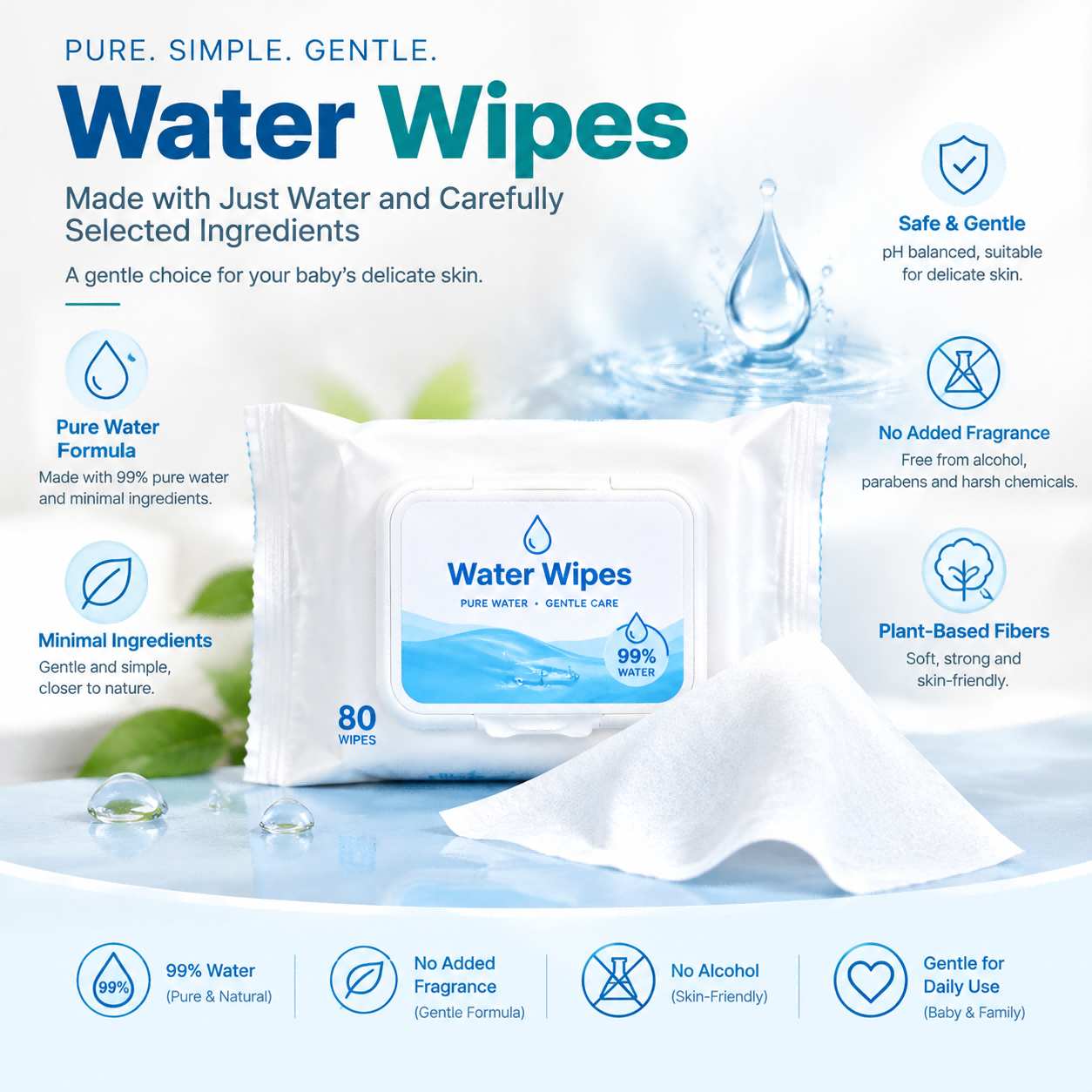
Water wipes are generally designed around a water-based formulation with a relatively simple ingredient profile. Many products in this category emphasize a high water content and minimal additional ingredients.
Depending on the product specification, the formulation may contain water alone or include other ingredients to support product stability, preservation, or performance.
However, the term "water wipes" does not automatically mean that a product contains only water, nor does it guarantee that every product has the same formulation.
What Are Regular Baby Wipes?
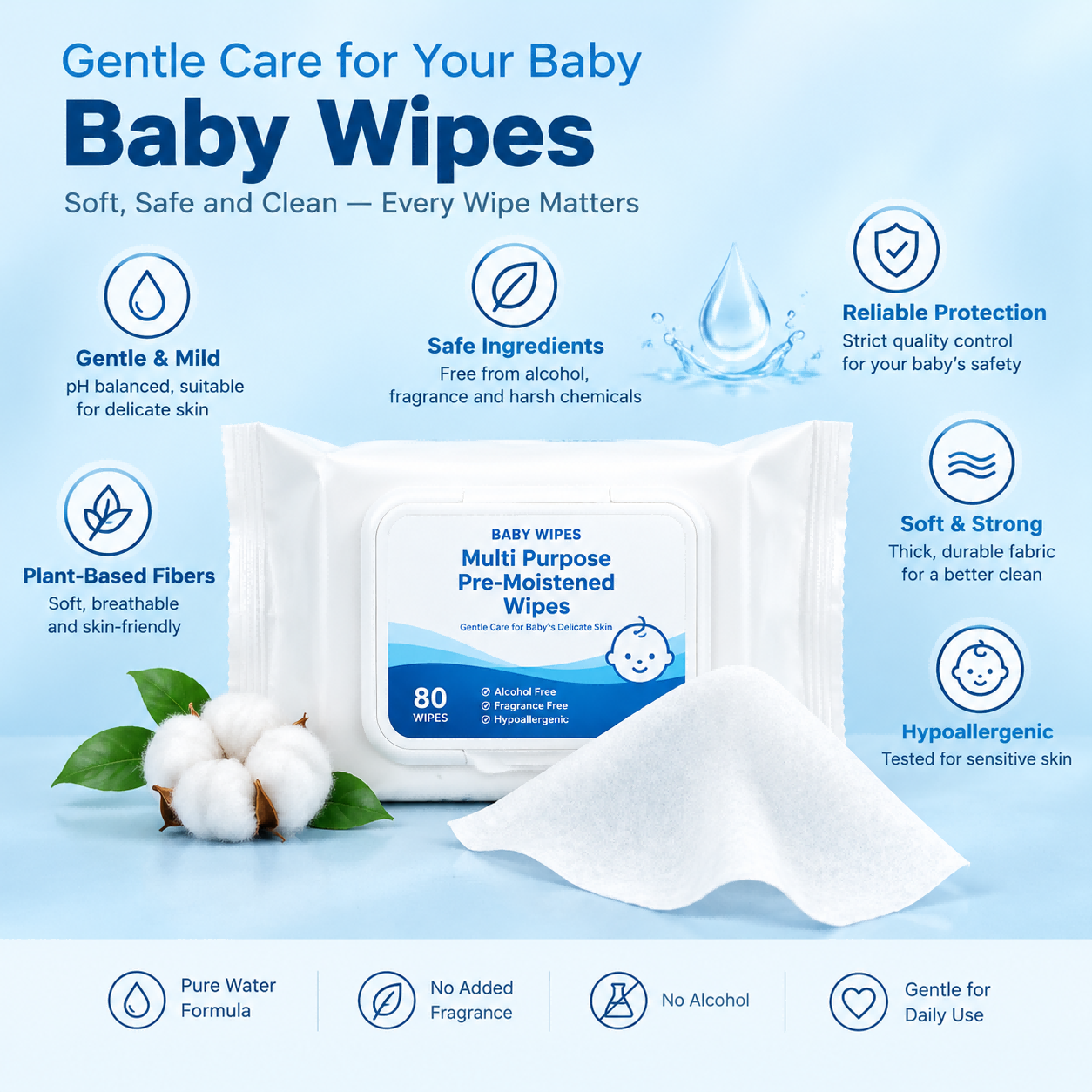
Regular baby wipes can be developed with a wider variety of formulations to meet different brand requirements and consumer preferences.
In addition to water, formulations may include:
- Humectants to help maintain moisture.
- Mild cleansing ingredients, where appropriate.
- pH-adjusting ingredients.
- Preservative systems, where required.
- Other functional ingredients selected for the product's intended use.
Not all regular baby wipes contain every ingredient listed above. The actual formulation depends on the manufacturer's development work and the brand's requirements.
**The key difference:** Water wipes generally focus on a simpler, water-centered formulation, while regular baby wipes may offer more flexibility in functional ingredients and product positioning.
2. Differences in Formulation and Ingredients
Formulation development is one of the most important differences between water wipes and regular baby wipes.
Water Wipes: A Simpler Formulation Approach
When developing water wipes, manufacturers typically focus on maintaining the desired water content, controlling the quality of the formulation, and ensuring that the finished product remains suitable throughout its intended shelf life.
Key considerations include:
- **Water quality:** Water must meet the applicable quality requirements for the product and manufacturing process.
- **Ingredient selection:** Any additional ingredients must be compatible with the intended formulation and product claims.
- **Microbiological control:** A high-water-content product requires appropriate controls to manage microbiological risks.
- **Product stability:** The formulation and packaging must work together to maintain product quality during storage.
A simpler ingredient list does not necessarily make a product easier to manufacture. In some cases, fewer formulation components mean that manufacturers must pay even closer attention to water quality, manufacturing hygiene, packaging integrity, and microbiological validation.
Regular Baby Wipes: More Formulation Flexibility
Regular baby wipes may be developed to deliver additional functions, such as moisturizing, cleansing, or a particular sensory experience.
Depending on the product requirements, formulation development may involve:
- Selecting suitable humectants.
- Evaluating mild cleansing ingredients.
- Adjusting pH where appropriate.
- Selecting and validating a suitable preservation system.
- Testing ingredient compatibility and long-term stability.
Each ingredient can affect the overall formulation. For example, a change in the type or concentration of an ingredient may influence pH, viscosity, compatibility, or preservation performance.
Manufacturers therefore need to evaluate the complete formulation rather than selecting ingredients independently.
Does a Simpler Formula Mean a Safer Product?
Not necessarily.
Product safety depends on the complete formulation, the quality of the raw materials, manufacturing hygiene, packaging, and appropriate testing.
A water-based formulation with fewer ingredients still requires a suitable microbiological control strategy. Similarly, a regular baby wipe with additional functional ingredients can be manufactured safely when its formulation and production controls are properly developed and validated.
For brands, the most important consideration is whether the finished product meets the relevant safety, quality, and regulatory requirements in its target market.
3. Differences in Raw Material Selection
Raw materials directly influence the performance, cost, and manufacturing requirements of both water wipes and regular baby wipes.
Nonwoven Fabric Selection
The nonwoven fabric is one of the main components of a baby wipe.
Depending on the product specification, manufacturers may consider materials such as:
- Viscose or rayon.
- Polyester.
- Cotton.
- Blended fibers.
- Other suitable nonwoven materials.
The choice depends on the required softness, strength, absorbency, texture, sustainability claims, and target cost.
Water wipes do not automatically require cotton or plant-based fibers. Likewise, regular baby wipes can use a wide range of nonwoven materials.
Important fabric specifications include:
**Basis weight:** Usually measured in grams per square meter (GSM). Fabric weight affects thickness, handling, and material cost.
**Softness:** Particularly important for products intended for delicate skin.
**Absorbency:** Influences how the fabric takes up and distributes the liquid formulation.
**Wet strength:** Helps the wipe maintain its integrity during use.
**Fiber composition:** Determines the material characteristics and whether particular fiber-related claims can be substantiated.
For OEM projects, the manufacturer should recommend a fabric specification based on the product's intended use, performance requirements, and budget.
Water Quality and Liquid Preparation
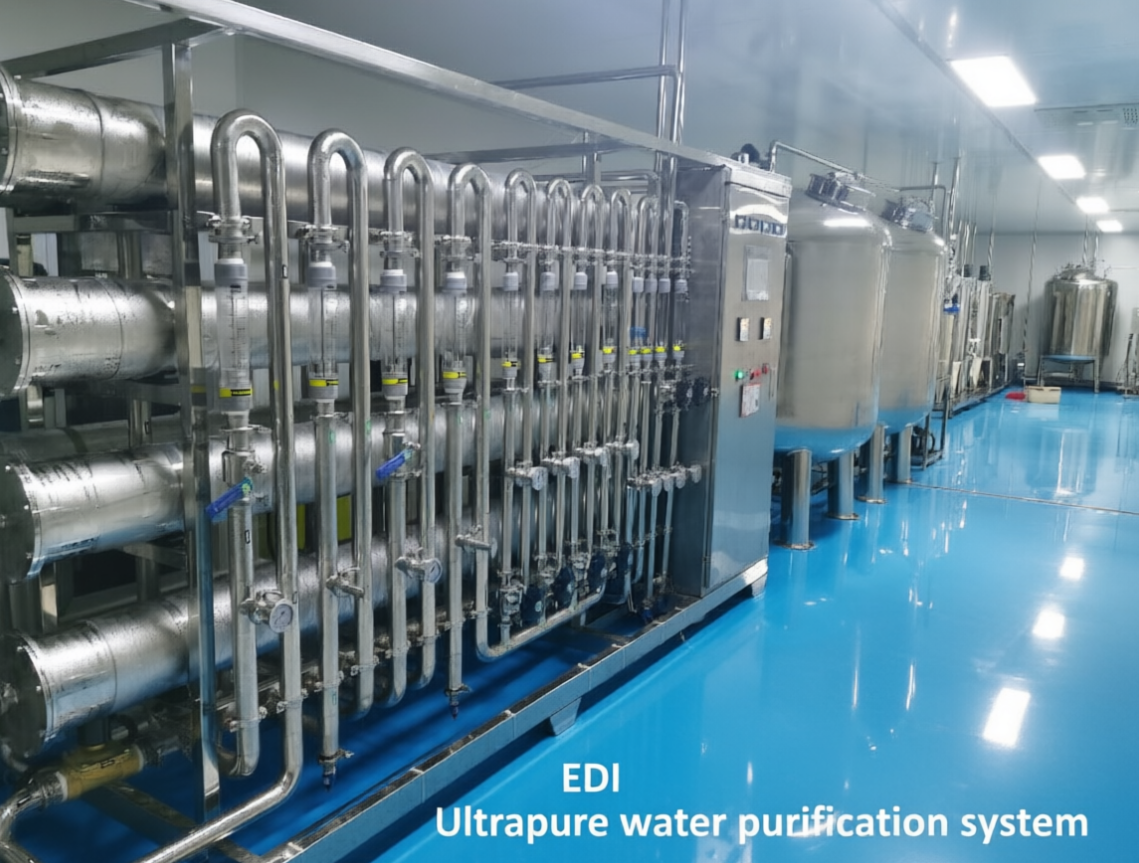
Water is a major component of both product categories, so water quality and handling are important parts of manufacturing.
Manufacturers need appropriate water treatment, monitoring, and sanitary handling procedures. They should also control the preparation, storage, and transfer of the liquid formulation.
Water quality requirements should be established according to the product's risk assessment and applicable standards rather than assuming that water alone guarantees product safety.
Packaging Material Selection
Packaging plays a particularly important role in wet wipes because it helps retain moisture and protects the product during storage and transportation.
Common packaging formats include:
- Soft packs with resealable labels.
- Soft packs with rigid lids.
- Multipacks.
- Individually wrapped wipes.
- Other customized packaging formats.
Manufacturers should evaluate the compatibility of the packaging materials with the formulation, as well as sealing performance and moisture retention.
For private label brands, packaging selection also affects production efficiency, material cost, minimum order quantities, and the overall product presentation.
4. Differences in the Manufacturing Process
Do water wipes and regular baby wipes require completely different production lines?
In most cases, no.
Both product categories generally use similar basic manufacturing stages. The main differences are more likely to involve formulation preparation, process controls, product specifications, and validation requirements.
Step 1: Water Treatment and Formula Preparation
The manufacturing process begins with preparing the water and, where applicable, the liquid formulation.
For water wipes, the formulation may be relatively simple, depending on the product specification.
For regular baby wipes, manufacturers may need to dissolve or disperse additional ingredients and ensure that the formulation is uniform.
In both cases, appropriate controls are necessary to verify the preparation process and maintain the required product quality.
Step 2: Nonwoven Fabric Feeding and Folding
The nonwoven material is fed into the production line and folded according to the required wipe dimensions and dispensing format.
The fabric specification, folding method, and finished wipe size must be matched to the packaging design and intended use.
For example, a wipe measuring 20 × 30 cm will require different material usage per piece from a smaller wipe measuring 15 × 20 cm.
Although the basic folding process may be similar for both product categories, the machine settings and material handling requirements depend on the specific product.
Step 3: Liquid Dosing and Impregnation
The prepared liquid is applied to the nonwoven fabric through a suitable dosing and impregnation system.
Manufacturers need to control the liquid dosage to achieve the target moisture level and consistent distribution across the wipes.
The required liquid quantity depends on several factors:
- Wipe dimensions and fabric weight.
- Fabric absorbency.
- Formulation characteristics.
- Target liquid-to-fabric ratio.
- Packaging specifications.
Too little liquid may affect product performance, while excessive liquid can cause leakage, handling problems, or unnecessary material and transportation costs.
Both water wipes and regular baby wipes require appropriate dosing controls. The specific settings depend on the formulation and fabric combination.
Step 4: Cutting, Counting, and Packaging
After folding and liquid application, the wipes are cut, counted, and packed according to the order specifications.
The packaging process may include filling, sealing, applying a resealable label or lid, and printing batch information.
The number of wipes per pack, package dimensions, sealing method, and production speed all affect manufacturing efficiency.
For example, an 80-count baby wipes pack and an 8-count travel pack may use similar base materials but require different packaging specifications and material consumption.
Manufacturers should also verify that the packaging can maintain product moisture and remain intact under expected storage and transportation conditions.
Step 5: Finished Product Inspection
Before release, finished products should undergo inspections based on their specifications and quality control plan.
Typical checks may include:
- Appearance and wipe dimensions.
- Number of wipes per pack.
- Liquid content and distribution.
- Package sealing integrity.
- Product pH, where applicable.
- Relevant microbiological quality tests.
- Stability and packaging compatibility assessments, as required.
The inspection plan should be established according to the product's risk profile, intended market, and applicable regulatory requirements.
**Manufacturing takeaway:** Water wipes and regular baby wipes can often be produced using similar equipment. Their differences lie mainly in the formulation, control measures, and validation needed to meet the requirements of each product.
5. Microbiological Control and Preservation
Microbiological control is a critical consideration for all water-based wet wipes.
Because wet wipes contain substantial moisture, manufacturers must consider potential contamination from water, raw materials, equipment, the manufacturing environment, and packaging.
Do Water Wipes Need Preservatives?
There is no universal answer.
Whether a water wipes formulation requires a preservative system depends on the complete product design, microbiological risk assessment, packaging, manufacturing controls, and applicable requirements.
A formulation containing very few ingredients is not automatically protected against microbial growth.
If a product is marketed without added preservatives, the manufacturer should have appropriate evidence to support the product's microbiological safety and shelf-life claims. The absence of a conventional preservative does not eliminate the need for effective manufacturing hygiene and product validation.
How Do Regular Baby Wipes Manage Microbiological Risks?
Regular baby wipes may use a suitable preservation system, depending on the formulation and product requirements.
Preservation must be evaluated in the context of the complete formulation. The effectiveness of a preservative system can be influenced by ingredient compatibility, pH, packaging, and other product characteristics.
Simply adding a preservative does not guarantee adequate protection.
What Should Manufacturers Test?
Depending on the product and target market, the testing and validation program may include:
- Microbiological quality testing of the finished product.
- Preservation efficacy testing, where appropriate.
- Stability testing under defined storage conditions.
- Packaging integrity and compatibility assessments.
- Verification of manufacturing hygiene procedures.
For brands developing private label baby wipes, it is important to discuss the required tests and supporting documentation with the manufacturer before confirming the final formulation.
6. Quality Control: What Should Manufacturers Check?
Quality control extends beyond checking whether the wipes look and feel acceptable.
A professional baby wipes manufacturing program should define the relevant specifications, inspection procedures, acceptance criteria, and documentation requirements.
Not every product requires exactly the same testing program. The specific tests should be selected according to the formulation, intended use, market requirements, and product claims.
For example, a brand requesting a particular shelf life should discuss the necessary stability evidence and packaging requirements with its manufacturer.
Quality documentation is also important for B2B buyers. Depending on the project, relevant documents may include product specifications, ingredient information, safety data sheets for applicable materials, test reports, and other supporting documentation.
7. Are Water Wipes More Expensive to Manufacture?
Water wipes are not necessarily more expensive or less expensive than regular baby wipes.
The final manufacturing cost depends on the complete product specification rather than the product name alone.
Key Factors Affecting Manufacturing Costs
**1. Nonwoven fabric**
Fabric type, GSM, fiber composition, and wipe dimensions can have a substantial influence on material consumption and unit cost.
**2. Formulation ingredients**
A simple formulation may reduce the number of ingredients required, but the actual savings depend on the raw materials used and their specifications.
**3. Production efficiency**
Production speed, machine configuration, changeover time, material waste, and labor requirements all contribute to manufacturing costs.
**4. Quality control and validation**
Microbiological testing, stability assessments, and other verification activities may contribute to development and production costs.
**5. Packaging**
A resealable label, rigid lid, individual wrapping, printed film, or customized packaging can change the cost per pack.
**6. Order quantity**
Larger orders may allow packaging and production costs to be distributed across more units. However, actual pricing depends on the manufacturer's production arrangements, raw material purchasing conditions, and order specifications.
Does a Simpler Formula Mean a Lower Price?
Not necessarily. In fact, developing a simpler formulation can require greater technical expertise and higher manufacturing costs.
The challenge is to maintain product safety and stability while minimizing the use of preservatives and other unnecessary ingredients, creating a formulation that stays as close to nature as possible. This requires careful ingredient selection, precise formulation development, strict microbiological control, and extensive product testing.
Therefore, a simpler formula does not automatically mean a lower cost. In many cases, achieving a clean, minimal-ingredient formulation while maintaining consistent quality and product safety requires more advanced technical expertise and greater investment in quality control and validation.
For an accurate quotation, buyers should provide the manufacturer with the target wipe size, GSM, pieces per pack, formulation requirements, packaging design, and expected order quantity.
Comparing quotations based on the same specifications is the best way to evaluate the actual cost difference between water wipes and regular baby wipes.
8. Which Type Should Brands Choose for OEM Manufacturing?
The right choice depends on brand positioning, target customers, market requirements, and budget.
When Should Brands Choose Water Wipes?
Water wipes may be suitable for brands that want to emphasize:
- A water-centered formulation.
- A relatively simple ingredient list.
- A specific formulation or ingredient declaration.
- A product concept built around minimal ingredients.
Before selecting this category, brands should confirm the precise formulation, substantiation for product claims, required testing, and packaging requirements.
When Should Brands Choose Regular Baby Wipes?
Regular baby wipes may be more suitable for brands seeking greater flexibility in product development.
Depending on the target market, brands may want to explore moisturizing formulations, different fabric types, customized wipe sizes, multiple pack counts, or other product features.
This flexibility can help brands develop different product lines for different price points and customer needs.
What Should Buyers Discuss With an OEM Baby Wipes Manufacturer?
Before starting a project, buyers should clarify the following points:
1. **Target market:** Which countries will the product be sold in, and what regulatory requirements apply?
2. **Product formulation:** Is a water-centered formulation required, or are additional functional ingredients acceptable?
3. **Fabric specifications:** What material, GSM, softness, and wipe dimensions are needed?
4. **Packaging:** What pack count, packaging format, and artwork are required?
5. **Quality requirements:** Which tests, specifications, and supporting documents are needed?
6. **Commercial terms:** What are the MOQ, sample arrangements, production lead time, and quotation conditions?
A detailed product brief helps the manufacturer assess feasibility and provide a more accurate quotation.
9. Frequently Asked Questions
Are Water Wipes and Regular Baby Wipes Made on the Same Production Line?
In many cases, yes. Both products can use similar equipment for fabric feeding, folding, liquid application, cutting, counting, and packaging.
However, the required formulation preparation, cleaning procedures, process settings, and quality validation may differ. Equipment suitability depends on the specific product and manufacturing requirements.
Do Water Wipes Contain Preservatives?
Some water wipes formulations may contain preservatives, while others may be developed without added preservatives.
The answer depends on the specific product. Buyers should review the ingredient list and ask the manufacturer about the microbiological control strategy and supporting validation.
What Is the Difference Between Water Wipes and 99% Water Baby Wipes?
The terms describe related but not necessarily identical product concepts.
Water wipes generally emphasize a water-centered formulation. A product labeled as 99% water typically makes a specific water-content claim.
The remaining portion may include other ingredients, depending on the formulation. Buyers should check the product's ingredient declaration and how the water percentage is calculated and substantiated.
Can Manufacturers Customize Water Wipes for Private Label Brands?
Yes. Depending on the manufacturer's capabilities, OEM/ODM customization may include wipe dimensions, nonwoven fabric, GSM, pack count, packaging format, artwork, and formulation development.
The available options, MOQ, development time, and testing requirements should be confirmed for each project.
How Do Manufacturers Ensure the Shelf Life of Water Wipes?
Shelf life should be supported by an appropriate product assessment and evidence.
Depending on the formulation and packaging, this may include stability testing, microbiological assessments, and packaging integrity or compatibility testing.
The final shelf-life claim should be based on suitable supporting evidence rather than assumptions based solely on the ingredient list.
10. Conclusion: The Right Manufacturing Process Starts With the Right Specifications
When comparing water wipes vs. regular baby wipes, the main manufacturing differences are found in formulation design, raw material selection, microbiological control, product validation, and cost structure.
The basic production processes are often similar, but each product needs controls tailored to its formulation, packaging, intended use, and target market.
For baby wipes brands, importers, and wholesalers, the best approach is to work with a manufacturer that understands both product development and manufacturing quality. Clearly defining the formulation, fabric, packaging, and testing requirements from the beginning can help reduce development risks and improve cost control.
**Looking for a baby wipes OEM/ODM partner?** Share your target product specifications, packaging requirements, and estimated order quantity to explore a manufacturing solution tailored to your brand.


 whatsapp